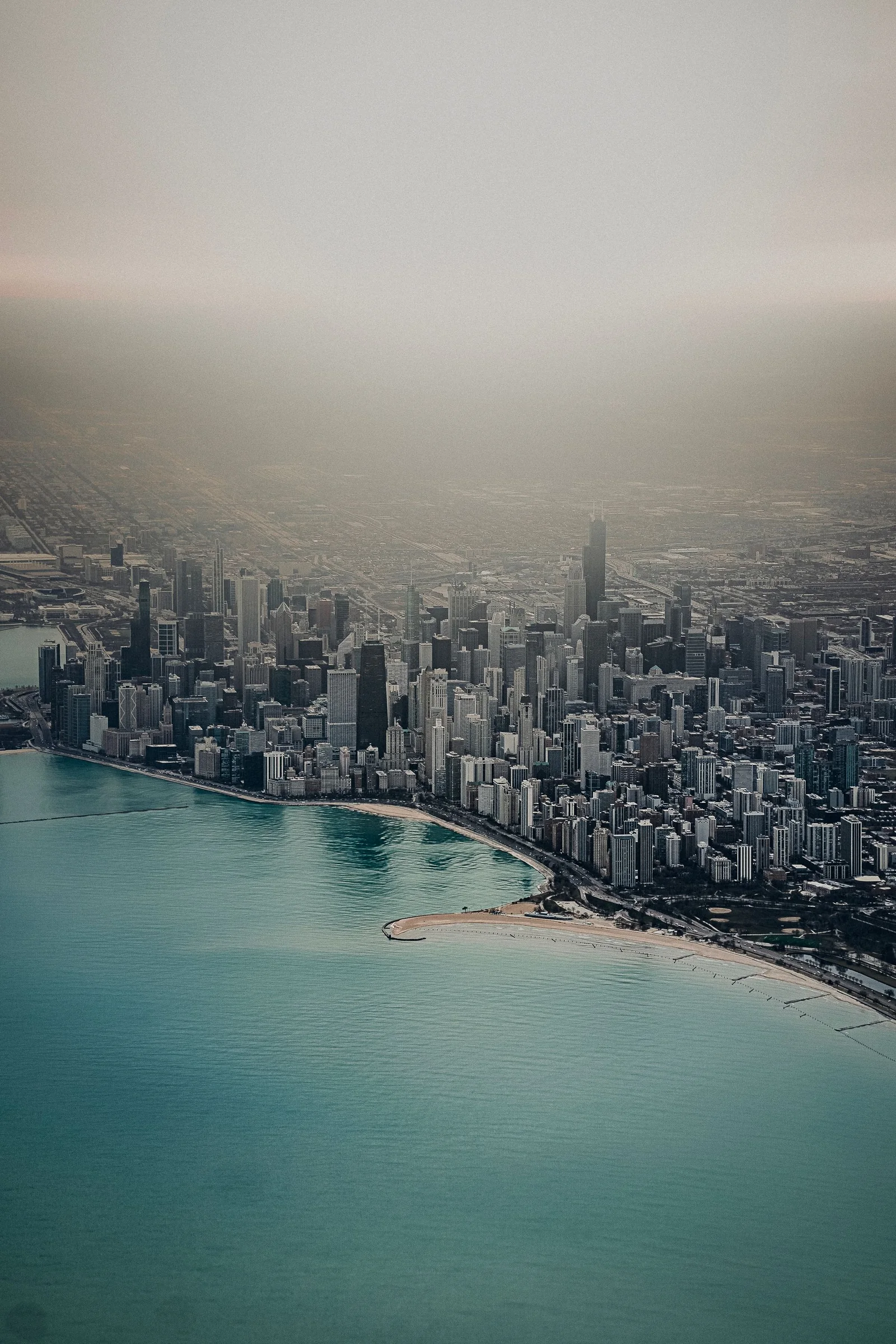
A train enters the frame, steel shadows move across the street, the soundtrack changes, and a property that looked anonymous a second earlier suddenly feels unmistakably Chicago. That moment can be the most valuable three seconds in a brand film. It can also be a production trap. If the treatment needs a specific train, from a specific direction, beside a specific subject, under a specific light, the creative idea depends on an operating transit system that does not exist to hit a commercial camera cue.
The better approach is to treat the train as an editorial clock. The useful window opens only when the audience job, visible subject, train role, camera geometry, sound, permissions, aviation conditions, and derivative crop agree. The production should know which of those elements it controls, which it merely observes, and which substitute preserves the idea when the window never opens.
CTA’s current professional filming and photography guidance calls the historic elevated system a recognizable Chicago landmark, describes varied infrastructure and locations, and routes professional projects through its Film Coordinator. That invitation is valuable, but it is not a blanket promise that any station, vehicle, employee, platform, trackside position, exterior property, public area, trademark use, or nearby drone path is available. This guide is for agencies and brand teams building an exterior aerial-and-ground sequence near the ‘L.’ It does not authorize access, flight, filming, use of CTA property or marks, interruption of transit, or capture of passengers.
The ‘L’ is a timing system, not decorative B-roll
Make one pass answer one audience question
A train should not enter the treatment merely because the production needs a Chicago signifier. Name the relationship the viewer must understand. A train passing behind a hotel entrance could express an actual arrival choice. A moving car above a retail block could reveal the difference between neighborhood scale and regional access. A brief crossing behind a workplace could show that the property participates in an active urban rhythm. In each case, the subject remains the property, person, or decision; the train supplies a timed relationship.
Write the audience question without naming a camera: What should a visitor understand about arriving here? Which relationship distinguishes this workplace from a generic tower? What does the street feel like during an ordinary movement cycle? If the answer is only “this is Chicago,” the shot is interchangeable with a skyline insert, street sign, bridge, or ground detail. An expensive synchronized pass has not earned its complexity.
The question also limits the claim. A visible train does not prove commute time, service frequency, station accessibility, reliability, property adjacency, a business relationship with CTA, or permission to enter a station. Any such statement requires a current authoritative source and approval by the party responsible for the claim. Let the frame establish what it visibly shows; use approved copy for what the camera cannot establish.
Choose the control level before the shot list
There are at least three different productions hiding inside the phrase “film the ‘L.’” The first is approved exterior context from a controlled property or camera area, where transit infrastructure happens to be visible. The second is a coordinated exterior production designed around a particular structure or operating pattern, with location, property, public-area, trademark, and safety questions resolved. The third actually uses CTA vehicles, facilities, staff, props, or controlled access. That level belongs in CTA’s professional process.
Do not price or storyboard those levels as equivalents. A controlled CTA production can offer coordination and access that an exterior observer does not have, but it also requires lead time, review, staffing, insurance, schedule accommodation, and budget. CTA currently asks professional productions to contact its Film Coordinator at least two weeks in advance, send a letter of intent with the script, storyboard, or concept, and participate in a pre-production discussion. CTA also notes that vehicle rentals are restricted during weekday rush periods or where otherwise limited. Those details should shape the treatment before a client approves an impossible date or angle.
For an exterior scene, use the Chicago aerial-production controller map to keep property, public-way, venue, CTA, municipal, and FAA questions separate. The lowest-control version may be the most honest and efficient if the train is atmosphere rather than the hero. The highest-control version may be justified when the vehicle, station, employee, signage, or precisely staged transit action is essential to the message.
Build the L-Window Board before the scout
Start with the audience job and visible subject
The L-Window Board is one row per proposed train appearance. Its first fields are audience job, visible subject, train role, and prohibited inference. Those fields prevent the steel, motion, and sound from overpowering what the campaign is actually selling. “Train crosses behind the west facade” is a description. “Help a relocating employee understand that the office sits inside an active transit-served district without claiming a specific commute” is an editorial job.
Next record the exact location, property controller, expected line or infrastructure type, desired direction of motion, camera position, lens intent, foreground, background, and the moment that opens and closes the usable composition. A train may be visible for thirty seconds but useful for three. The board should identify the edit point, not ask the field crew to discover the whole idea under pressure.
Add a visible-fact line. What can the approved take actually show? It may show a train moving on an elevated structure behind a named property, a pedestrian entrance in the foreground, and a piece of district context. It does not establish an endorsement, schedule promise, route convenience, tenant identity, safety conclusion, or quantified accessibility benefit. This line follows the footage into captions and derivative briefs.
Write a one-sentence pass test
Complete this sentence: “The pass works only if the viewer can see ___ in relation to ___, while the edit does not imply ___.” Make the blanks specific enough that an editor can reject a beautiful but irrelevant take. A valid test might require the hotel entrance and elevated train to remain legible in the same horizontal and vertical crops while avoiding any claim that CTA endorses the property.
If the test can be satisfied without the train, decide whether the production should spend control, waiting time, and approval attention on it. If the train is essential, define why and assign an owner who can accept or reject the take. The test becomes the bridge between treatment language and field reality.
Use a timing-confidence ladder
A rail schedule, a public prediction, a scout’s observation, and a CTA-coordinated production plan are different kinds of timing information. Record the source and confidence instead of writing one exact minute into the call sheet as if every source were a guarantee. A planning ladder can move from broad service pattern, to current alerts and public prediction, to repeated scout observation, to an explicitly coordinated production arrangement. Each higher rung may improve planning confidence, but none replaces the live safety and operating decisions of the responsible parties.
CTA explains that its Train Tracker APIs produce estimates from rail-infrastructure data and recent travel times. CTA also says predictions may be withheld during major work, reroutes, or disruptions and describes circumstances in which scheduled information may appear instead of a live prediction. Those qualifications matter even if the team merely consults the public tracker. A predicted arrival is situational information, not a contracted mark for the train. Any API use also has terms, key, data-use, and branding requirements; this article does not recommend building or licensing a commercial timing tool.
The board therefore needs a tolerance band: earliest useful opening, latest useful opening, maximum wait, number of practical resets, and the condition that ends pursuit of the pass. A production that can wait forty minutes makes a different decision from a crew that has eight minutes of controlled curb access, a talent window, and a rapidly moving sun angle. Write the stop rule before the train is late.
Design the reset and both fallbacks
A reset is more than “wait for the next train.” People move, delivery vehicles arrive, clouds change exposure, traffic fills the foreground, the property operation changes, and talent loses position. Record which elements must return before another take. Assign one person to call the visual reset, one to monitor the production area, and the remote pilot to own every aviation decision.
Create two different substitutes. The no-train substitute preserves the camera position and subject while replacing the moving vehicle with track structure, shadow, sound design, ground action, or an approved cutaway. The no-flight substitute preserves the audience job with a controlled ground camera, elevated authorized position, licensed existing shot, diagram, map, or different edit. A concept that has only one fallback usually has none; bad airspace or ground conditions can remove the drone while disrupted service can remove the train.
The substitutes belong in the treatment, budget, call sheet, and client expectation. They are not apologetic backup shots. A ground-level composition under an elevated structure may carry more Chicago texture, human scale, and usable sound than a high oblique. The production’s success criterion is the audience relationship, not proof that both a train and a drone appeared.
Separate CTA participation from exterior context
Ask CTA when the production uses CTA
CTA’s professional page describes trains, buses, props, support personnel, facilities, and a formal request path. If the concept needs a platform, station interior, CTA vehicle, employee, controlled sign, prop, supervised area, or coordinated action, the agency should bring the real concept to CTA early. The script or storyboard should show what is in frame, how transit is represented, what personnel and equipment are involved, how long the production occupies the area, and how the final work will be used.
Do not send a vague request for “cinematic CTA access” and expect the authority to design the scene. The L-Window Board gives the discussion a specific audience job, location, action, control need, camera footprint, timing range, sound plan, and fallback. CTA can respond to the requested use; the agency remains responsible for the brand story, property and talent controls, other permits, aviation plan, rights, and final edit.
CTA participation can change the budget and schedule materially. The current page describes minimum rental periods, support personnel, and restrictions around rush periods. Confirm current rates, requirements, availability, insurance, and agreement terms directly for the project. Do not copy a web-page example into a client estimate or assume a location named online is available on the desired day.
Do not convert a public photo policy into a commercial production permit
CTA’s photo and video policy permits ordinary personal hand-held capture in public areas while restricting ancillary equipment, non-public areas, obstruction, interference, and unsafe behavior. It expressly directs professional and commercial work to the professional filming process. That distinction should remain visible in the production file. A small camera does not make a commercial campaign personal, and a public platform does not become a private set.
The same discipline applies outside CTA property. A public sidewalk, privately controlled plaza, roof, parking area, loading zone, and occupied commercial space can each create a different production footprint. Confirm who controls the camera area and what the crew, stands, monitors, talent, vehicles, spotters, and safety perimeter actually require.
Map every non-CTA controller
Add columns for property permission, public-area or municipal process, talent and participant releases, neighboring operations, signs and trademarks, music and recorded sound, security review, privacy treatment, and client usage. CTA approval does not provide a roof key; a landlord’s permission does not authorize use of CTA property or branding; a City production process does not establish federal flight authority. The board should show unresolved controllers as holds, not collapse them into a green “permitted” cell.
A property-focused campaign also needs factual approval. If the train appears behind a building, decide whether the edit implies adjacency, direct access, sponsorship, or a specific route benefit. Verify any station name, walking relationship, or route statement at the time of publication and keep the approved source with the project. The Chicago high-rise aerial reporting framework can help define the property’s audience job; the L-Window Board then governs the moving transit event.
Record exclusions as carefully as permissions. A neighboring residence, school, hospital, security feature, worker area, passenger face, license plate, platform edge, advertisement, or unrelated business may need to stay out of capture or publication. The field crew should know which crop, angle, focal length, timing, or substitute protects that exclusion before arriving.
Protect passengers and operations from the concept
Passengers and ordinary service are not uncontrolled production design. The concept should not require a crowd to move, react, clear an area, repeat an action, or become identifiable without a lawful and approved participant plan. It should not place equipment where people queue, board, exit, use stairs or elevators, or follow employee directions. CTA’s public policy emphasizes customer flow and safety; a professional agreement may add project-specific requirements.
Build the shot so a person entering the wrong part of the frame causes a safe hold or a switch to the substitute, not pressure to “steal the take.” The same applies to streets and moving vehicles. If a ground area cannot remain controlled in the way the production and remote pilot require, the aerial portion does not become safer because the train is arriving.
Sound needs equal care. A train pass may supply exactly the mechanical rise the edit wants, or it may erase dialogue, create an unusable interview, or identify a location more strongly than the image. Decide whether production sound, wild sound, designed sound, licensed music, or silence carries each derivative. Record who owns the sound decision and whether the audio changes the factual or brand implication of the scene.
Let exact-address aviation review rewrite the camera plan
Separate a good frame from a flyable frame
A scout can find a compelling angle without finding a legal, safe, or controllable drone operation. The responsible remote pilot must evaluate the exact coordinates, airspace, authorization needs, launch and recovery control, visual line of sight, altitude, structures, wires, trains, people, moving vehicles, emergency options, signal environment, weather, light, and proposed aircraft. A nearby approved ground camera position answers none of those questions by itself.
The FAA’s current commercial-operator guidance identifies Part 107 certification and operating rules, including visual line of sight, people, moving vehicles, airspace, night operations, and other conditions that may require specific compliance or a waiver. The FAA’s airspace-authorization guidance describes LAANC and FAADroneZone paths and requires the request to identify exact time, altitude, and location. An authorization is still only one layer; it does not grant property access or make the scene safe.
Give the pilot the board before the scout route is locked. The pilot may move the launch area, shorten the path, change altitude, reject a lateral move, choose a different aircraft, require a controlled area, alter the timing window, or remove the aerial entirely. Those changes should flow back into composition and editing, not appear as a field-day surprise.
A train cue never outranks the remote pilot
No director, client, tracker prediction, radio call, or approaching train overrides the pilot’s authority to delay, change, or decline the operation. Put that rule on the board and call sheet. When the pass enters the window but people, vehicles, aircraft, weather, signal, obstructions, or site conditions do not, the window is closed.
A stop decision should trigger the named substitute immediately. This protects the crew from chasing a disappearing moment and helps the client see that the production delivered the approved story architecture even when a particular method was unavailable.
Pair every aerial with a ground or edit substitute
Design pairs by audience function. If the aerial was supposed to orient the hotel entrance to the elevated structure, a wide ground view plus an approved map may preserve the relationship. If the aerial was supposed to reveal motion against a facade, a long-lens ground compression may produce a stronger pass. If the aerial provided a transition, train sound, track shadow, or a moving reflection may carry the edit without showing the vehicle at all.
Pairing changes the budget for the better because it reveals which ground resources must be present regardless of flight. It also prevents the aerial unit from becoming the entire production’s critical path. The Chicago aerial scope and cost guide explains why access, scheduling, rights, post-production, and operating complexity belong in the scope. The L-Window Board turns those cost drivers into a scene-level decision.
Do not call every substitute equivalent. Record what information or emotion it preserves and what it loses. An approved station view may show passenger scale but not the property relationship. A ground exterior may preserve the facade and train but lose district orientation. A licensed archive may preserve the iconic motion but not current conditions. Honest labels keep the editor from using a fallback to make a claim it cannot support.
Protect the train’s meaning across every derivative
Build one approved geographic and sound master
The long-form master should establish the approved relationship among property, track, train, people, sound, and location before social versions are cut. Keep the clean source, synchronized sound, take metadata, approvals, restrictions, visible-fact line, and final selected pass connected. If a crop or mute version removes the property entrance, station context, qualifying caption, or sound cue that made the shot intelligible, it is a different communication claim.
Create a source-to-derivative register. For each output, record aspect ratio, duration, crop, audio state, caption, on-screen text, CTA or property mark treatment, accessibility text, channel, usage term, approval owner, and retirement trigger. A partner should not receive a clean shot whose limitations existed only in the agency’s edit notes.
The source master should preserve more visual room than the hero edit needs, but “more” is not unlimited surveillance or uncontrolled capture. Frame intentionally, minimize unrelated people and sensitive detail, and collect only the duration and angles the approved deliverables require. Rights and privacy review become harder as speculative footage expands.
Crop-test the pass before production
Place a representative still or scout diagram into 16:9, 9:16, 4:5, 1:1, a silent page hero, and a small mobile card. Mark the minimum subject, train, and context area that must survive. A horizontal composition that depends on a train entering from far left may vanish in a vertical crop. A vertical version may retain the train but remove the property, turning a relationship shot back into generic transit footage.
Use the crop test to revise camera distance, angle, motion, and edit point before the field day. It may justify a second camera, a wider locked ground frame, or a clean still captured after the pass. It may also prove that one expensive synchronized take cannot serve every deliverable, allowing the team to plan distinct but related shots.
Stop version drift from changing the claim
Version drift begins when a later editor sees a dramatic train shot without the board. The editor may add a commute-time line, place the image beside an unrelated location, remove a disclosure, crop out the actual subject, or imply that a partner participated. Keep the visible-fact line and prohibited inference with the source, not only in a campaign deck that will disappear.
Use approval states rather than a generic “final” folder: source approved for internal edit, property-approved, participant-cleared, CTA or trademark-reviewed when applicable, flight-record complete, channel-approved, partner-approved, expired, or withdrawn. Not every project needs every state, but every distributed file needs a clear current state and owner.
Set refresh triggers. Service changes, construction, station access, property identity, signage, tenant mix, campaign claims, usage terms, or rights may make a sequence stale even though the pixels have not changed. A durable Chicago media library preserves the date, location, subject, restrictions, and source lineage needed to decide whether the shot can return.
Run the take-window test before commissioning capture
Ask eight questions that can stop the shot
Use the test before booking: (1) What single audience question does the pass answer? (2) What visible subject must remain legible with the train? (3) Which inference is prohibited? (4) Is the concept exterior context, coordinated exterior work, or CTA-controlled production? (5) Which exact property, public-area, participant, CTA, trademark, and usage decisions remain open? (6) Has the responsible pilot reviewed the exact-address aerial concept and controlled ground area? (7) Do both a no-train and no-flight substitute preserve the audience job? (8) Does the approved meaning survive horizontal, vertical, silent, still, and partner versions?
A “no” does not always kill the campaign. It may remove the train, move the camera, lower the control level, add lead time, change the claim, narrow the deliverables, or promote a stronger ground substitute. What it should not do is remain hidden until the crew hears a train approaching.
Score the board as ready for scope, conditional, or rejected. Ready for scope means the audience job and control path are coherent enough for responsible parties to assess; it does not mean the flight or CTA use is approved. Conditional means a named owner and date exist for each open decision. Rejected means the scene is decorative, misleading, uncontrolled, unsafe, or unable to survive a foreseeable fallback.
Send the board, not a guaranteed train-and-drone promise
A useful feasibility request includes the exact address and desired camera areas; property or person the film serves; intended train role; whether CTA vehicles, facilities, employees, props, or controlled access are requested; approximate dates and light windows; audience and approved claims; talent and ordinary-public plan; sound treatment; deliverables and crops; usage and partners; known location controls; and both substitutes. The production can then separate approved work, conditional elements, client dependencies, and exclusions.
Use the verified Chicago real-estate aerial service when the core subject is a property and its setting. When the board is specific enough for an exact-address discussion, request a quote with the real location, production window, control level, deliverables, usage, and fallback expectations. US Drone Footage Group can help translate that brief into a production scope and seek an appropriately qualified local operator, subject to verified availability, airspace, access, people, vehicles, transit operations, property activity, weather, equipment, method, permissions, and approvals.
The success measure is not whether a drone captured a train. It is whether one controlled window made a real Chicago relationship legible, survived responsible review, and remained useful when the expected pass or aerial method changed.